
(A Complete Buying Guide for Smart Indian Travelers)
Table of Contents
Introduction: The Small Gadget That Can Ruin Your Entire Trip
Let me tell you something no one talks about in travel reels.
You see airport outfits.
You see slow-motion boarding shots.
You see dreamy cafés in Europe and skyline views from hotel balconies.
But you don’t see the silent panic that happens when your phone battery drops to 5% in a foreign country — and your charger simply doesn’t fit into the wall.
Because that moment?
It’s not aesthetic.
It’s stressful.
You can forget socks.
You can forget shampoo.
You can even survive without a travel pillow.
But forget your travel adapter?
That’s full panic mode.
And I’m not exaggerating.
I learned this the hard way during my first international trip to Kuala Lumpur. I had planned everything perfectly — flight tickets booked months in advance, hotel pre-paid, itinerary saved in Google Docs, offline maps downloaded, airport pickup arranged.
I thought I was prepared.
After landing, clearing immigration, and dragging my luggage through the airport, I finally reached my hotel room. I remember feeling relieved. Long flight. Heavy backpack. Zero sleep.
All I wanted to do was:
- Charge my phone
- Inform my family I had arrived
- Check next day’s city tour details
- Order food
Simple, right?
I opened my bag. Took out my charger. Plugged it into the socket.
It didn’t go in.
Different plug type.
Different socket design.
I tried adjusting it. Turning it. Pushing harder.
Nothing.
And then I looked at my phone battery.
7%.
That’s when reality hits.
Because in 2026, travel is no longer just about physical movement. It’s digital survival.
Think about it honestly.
Today, we travel with:
- Smartphones (our maps, translator, camera, payment tool)
- Laptops (for work, study, content creation)
- Smartwatches (boarding passes, notifications)
- Cameras (memories we can’t recreate)
- Power banks (backup life support)
- Hair styling tools (because photos matter)
- Portable Wi-Fi devices (especially abroad)
- Bluetooth earphones
- E-readers
- Tablets
Each one needs power.
And without power?
No Google Maps.
No Uber booking.
No hotel confirmation access.
No digital boarding pass.
No currency converter.
No communication with family.
It sounds dramatic — but it’s real.
What most first-time international travelers don’t realize is this:
The world does not use one universal plug system.
There are more than 15 different plug types used globally.
India mainly uses Type C, D, and M.
But:
- The UK uses Type G.
- The USA uses Type A and B.
- Most of Europe uses Type C, E, and F.
- Australia uses Type I.
Your Indian charger pins simply won’t fit in most international sockets.
And here’s the part that surprises many travelers:
Hotels do not always provide adapters.
Even if they do, availability is limited.
And airport stores?
They sell adapters at 2x–3x normal price.
So that night in Kuala Lumpur, I did what most travelers end up doing — I went downstairs and asked reception.
They had none available.
My only option was to search for a nearby convenience store.
In a new country.
With 7% battery.
Relying on screenshot directions.
That was the night I understood something very important.
A travel adapter is not a “maybe I’ll carry it” item.
It is not optional.
It is not a luxury.
It is travel survival.
It protects:
- Your connectivity
- Your safety
- Your access to bookings
- Your navigation
- Your digital payments
- Your memories
It protects your peace of mind.
And in 2026, peace of mind while traveling is priceless.
The world is more connected than ever.
Remote work is normal.
Students study abroad.
Content creators travel full-time.
Even short vacations involve multiple devices.
According to global travel trends, modern travelers carry an average of 3–5 electronic devices per trip. That number keeps increasing every year.
Which means one thing:
A good travel adapter is no longer just a backup accessory.
It is a core travel essential.
But here’s another truth.
Not all travel adapters are the same.
Some:
- Overheat
- Don’t support high wattage
- Lack surge protection
- Break within months
- Don’t support fast charging
And choosing the wrong one can damage devices worth thousands.
That’s why this guide is not just a list of products.
This is a complete, practical, beginner-friendly, and expert-backed guide designed especially for Indian travelers heading abroad in 2026.
Inside this article, you will discover:
- The 5 best travel adapter options for international travel
- Which one suits students vs digital nomads vs business travelers
- The difference between adapter and converter (a common mistake)
- Wattage and voltage explained simply
- Real-world mistakes travelers make
- Budget vs premium decision guidance
- Travel adapter trends in 2026
- Long-term durability insights
- Safety features you must never ignore
By the time you finish reading, you won’t just buy a travel adapter randomly.
You’ll understand exactly:
- What you need
- Why you need it
- And which one matches your travel style
Because nothing kills travel excitement faster than standing in a beautiful foreign hotel room with a dead phone and a useless charger in your hand.
And trust me — once you experience that once, you never forget your travel adapter again.
Let’s make sure you never experience it the first time.
Let’s begin. 🌍🔌
Why You Need a Travel Adapter in 2026 (More Than Ever)
Here’s something interesting.
There are 15+ plug types used globally.
India uses:
- Type C
- Type D
- Type M
But:
- USA uses Type A & B
- UK uses Type G
- Europe uses Type C, E & F
- Australia uses Type I
That means your Indian charger will not fit in most international sockets.
According to global travel tech statistics, travelers now carry an average of 3–5 electronic devices per trip.
That means multiple charging needs.
And airports? They sell adapters at 2x–3x price.
Lesson: Carry your own.
Travel Adapter vs Converter (Important Difference)
Many beginners get confused.
Let’s clear this simply.
Travel Adapter → Changes plug shape only
Converter → Changes voltage
Most modern devices (phones, laptops) support 110V–240V automatically.
Check your charger label. If it says:
“Input: 100–240V”
You only need a travel adapter.
If not? Then you may need a converter.
This is one of the biggest beginner mistakes.
What to Look for Before Buying a Travel Adapter
Don’t just pick the cheapest one online.
Here’s what smart travelers check:
1. Universal Compatibility
Choose an adapter that works in:
- USA
- UK
- Europe
- Australia
That covers 150+ countries.
If you travel often, universal is the safest choice.
2. USB + Type-C Ports
In 2026, USB-C fast charging is essential.
Look for:
- At least 2 USB ports
- 1 USB-C port
- Smart charging support
It saves space and eliminates extra chargers.
3. Watt Capacity
Very important.
If you plug in high-power devices like laptops, check:
- 45W or 65W support
- Smart power distribution
Low watt adapters can overheat.
4. Surge Protection
Voltage fluctuations happen.
Especially in:
- Southeast Asia
- Parts of Europe
- Budget hotels
Surge protection protects your expensive gadgets.
5. Compact & Lightweight Design
If you’re a backpack traveler, space matters.
Bulky adapters:
- Take unnecessary space
- Add weight
Minimal design is better.
5 Best Travel Adapters for International Travel in 2026
Now let’s talk about the real options.
1. Universal All-in-One Travel Adapter (Best Overall)
Best for: Multi-country travelers
This is the sliding pin model you’ve probably seen.
It includes:
- US plug
- UK plug
- EU plug
- AUS plug
- 3 USB ports
- 1 Type-C
Why it’s powerful:
You don’t need separate adapters for every country.
Who should buy this:
- Europe backpackers
- Students studying abroad
- Frequent flyers
Pros:
✔ Covers 150+ countries
✔ Compact
✔ Multiple device charging
Cons:
✘ Slightly bulky compared to single plug models
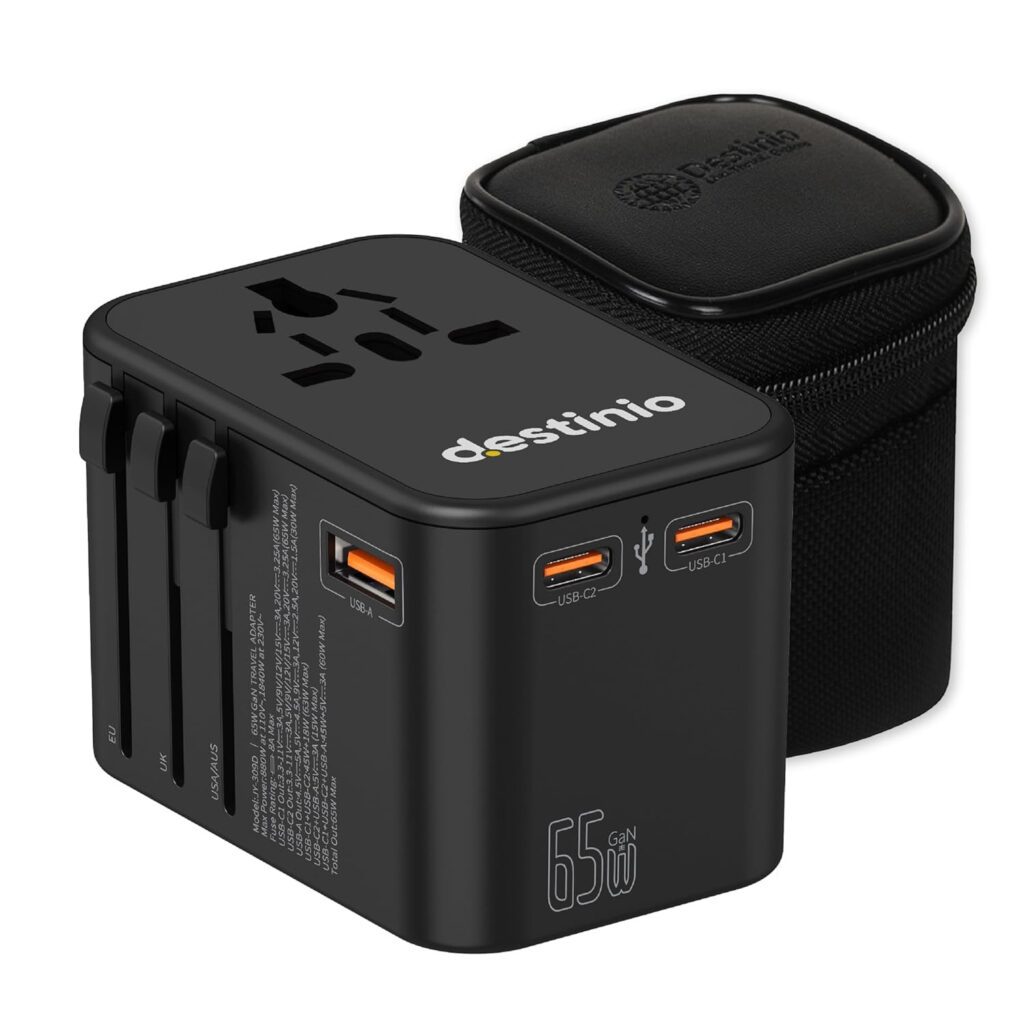
2. 65W USB-C Fast Charging Travel Adapter (Best for Laptop Users)
Best for: Digital nomads & business travelers
This adapter supports:
- 65W fast charging
- Laptop charging
- Phone + tablet simultaneously
If you carry:
- MacBook
- Gaming laptop
- iPad
This is a must.
Pros:
✔ Fast charging
✔ Saves time
✔ Smart chip protection
Cons:
✘ Slightly expensive
👉 product
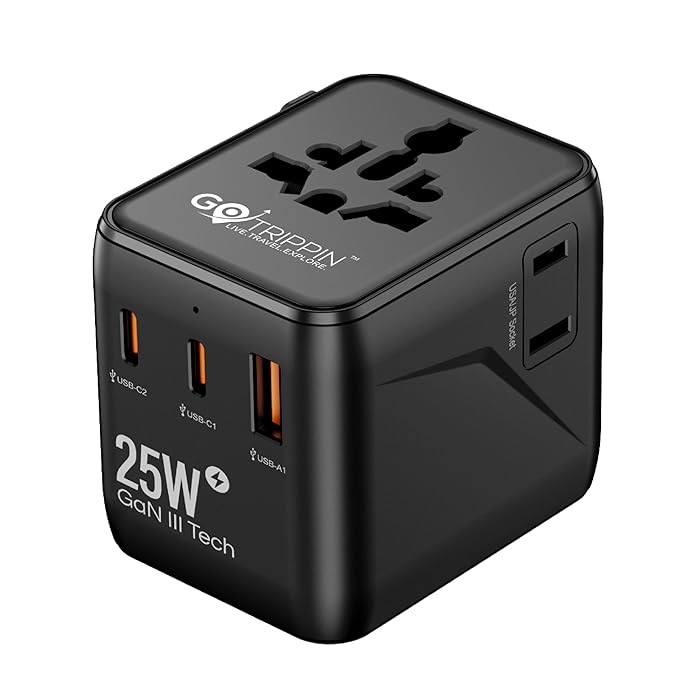
3. Compact Mini Travel Adapter (Best for Backpackers)
Best for: Budget trips
If you’re going for:
- Thailand
- Vietnam
- Bali
- Dubai
And carrying only:
- Phone
- Power bank
Then you don’t need heavy equipment.
Pros:
✔ Ultra lightweight
✔ Affordable
✔ Easy to carry
Cons:
✘ Limited ports
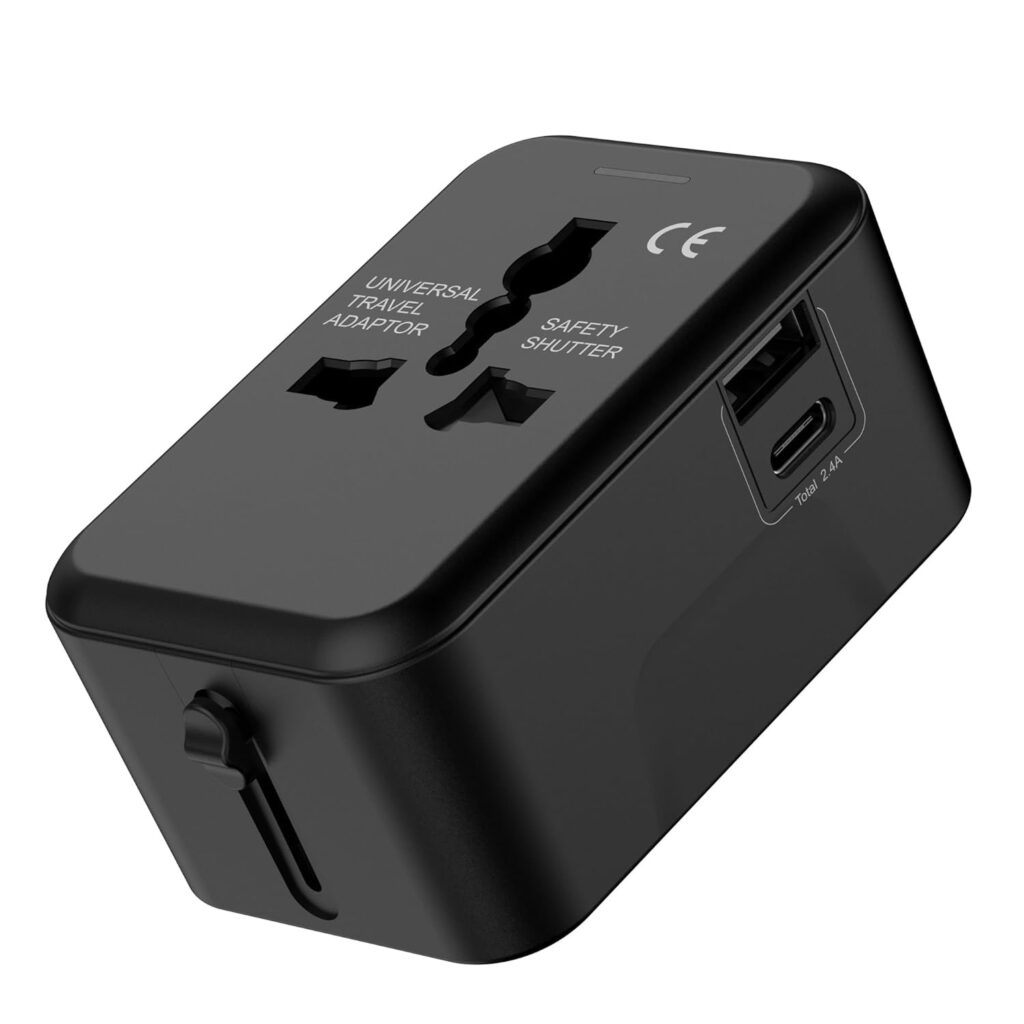
4. Premium Travel Adapter with Surge Protection (Best for Expensive Gadgets)
Best for:
- DSLR users
- Drone travelers
- Creators
Features:
- Surge protection
- Auto fuse
- Safety shutters
If your gadgets are worth lakhs, don’t risk it.
Pros:
✔ High safety
✔ Durable
✔ Long lifespan
Cons:
✘ Higher price

5. Budget Travel Adapter (Best Value Option)
Best for:
- First-time travelers
- Students
Covers basic international plug types.
Pros:
✔ Affordable
✔ Simple
✔ Works well for light use
Cons:
✘ Not ideal for heavy devices
Common Mistakes to Avoid
Let me save you from travel regret.
❌ Buying at Airport
Overpriced.
❌ Ignoring Watt Rating
Can damage adapter.
❌ Carrying Only One Adapter
Always carry backup.
❌ Forgetting Destination Plug Type
Always research first.
Travel Adapter Trends in 2026
Here’s what’s new:
- GaN technology (smaller but powerful adapters)
- USB-C dominant charging
- Multi-device smart charging
- Eco-friendly materials
Technology is making adapters smarter and smaller.
How Long Does a Good Travel Adapter Last?
If you invest in quality:
- 3–7 years lifespan
- Depends on usage
- Avoid water & pressure
Cheap ones? 1 year max.
Tip from Experience
Always keep adapter in:
✔ Cabin bag
Not check-in.
If luggage gets delayed, at least you can charge your phone.
Frequently Asked Questions (Detailed & Helpful)
1. What size travel adapter should I buy?
This depends completely on your travel style.
If you are visiting only one country, technically you could buy a single plug adapter specific to that destination. For example, if you’re only going to the UK, a Type G adapter will work.
But here’s the smarter approach.
If you:
- Travel to different countries
- Plan future international trips
- Do multi-country Europe tours
- Study abroad
- Travel for work
Then a universal travel adapter is the safest and most practical option.
Universal adapters usually support 150+ countries and include plug types for:
- USA
- UK
- Europe
- Australia
Instead of buying a new adapter every time, you invest once and use it for years.
Also consider size in terms of power capacity:
- For phone-only users → Basic compact adapter works.
- For laptop users → Choose 45W or 65W supported models.
- For heavy gadget users → Go for multi-port adapters.
So the real answer isn’t about physical size.
It’s about compatibility and power capacity.
Think long-term, not trip-specific.
2. Can I charge a laptop with a travel adapter?
Yes — but this is where many people make mistakes.
A travel adapter only changes the plug shape. It does not increase power output.
So you must check two things:
1. Watt Rating of the Adapter
If your laptop charger needs 65W and your adapter only supports 30W, it may:
- Charge very slowly
- Overheat
- Or not charge at all
Look for adapters that clearly mention:
- 45W support (minimum for small laptops)
- 65W support (ideal for most modern laptops)
2. Voltage Compatibility
Most modern laptops are dual voltage (100V–240V). Check your charger label.
If it says:
“Input: 100–240V”
You’re safe.
If not, you may need a voltage converter as well.
In 2026, many premium travel adapters come with USB-C Power Delivery (PD) support, which is perfect for MacBooks and Type-C laptops.
So yes — laptops can be charged.
Just don’t ignore the technical details.
3. Are travel adapters safe to use?
Yes — but only if you buy quality ones.
A good travel adapter should include:
- Surge protection
- Safety shutters
- Built-in fuse
- Certified materials (CE, FCC, RoHS approved)
Cheap, unbranded adapters may:
- Overheat
- Spark
- Melt
- Damage expensive devices
Especially in countries where voltage fluctuations are common.
Safety is extremely important if you carry:
- DSLR cameras
- Drones
- High-end laptops
- iPads
- Gaming devices
Never compromise just to save a few hundred rupees.
Think of it this way:
You are protecting gadgets worth ₹50,000–₹1,50,000.
A quality travel adapter is insurance.
4. Do hotels provide travel adapters?
Some do.
Most don’t.
Luxury hotels sometimes keep a few adapters at reception. But:
- Availability is limited
- They may charge a deposit
- They may not have the plug type you need
Budget hotels and hostels usually do not provide adapters.
And here’s something many travelers don’t know:
Different rooms in the same hotel may have different socket types.
Never depend on hotel availability.
Always carry your own travel adapter in your cabin bag.
Because if your check-in luggage gets delayed, at least you can charge your phone immediately.
5. Is an expensive travel adapter worth it?
Short answer?
If you travel once every 3–4 years → Probably not necessary.
If you travel internationally 2–3 times a year → Absolutely yes.
Here’s why:
Premium travel adapters usually offer:
- Better build quality
- Fast charging support
- Surge protection
- Long lifespan (3–7 years)
- Better heat management
- Smart chip technology
Cheaper adapters may last 1 year.
Premium ones can last 5+ years.
If you calculate cost per trip, expensive adapters often become cheaper in the long run.
Plus, they protect expensive electronics.
So it’s not about the adapter price.
It’s about the value of the devices it protects.
6. Do I need both a travel adapter and a voltage converter?
In most modern cases — no.
Most smartphones, laptops, and chargers today are dual voltage (100–240V compatible).
Check your charger label.
If it supports 100–240V, you only need a travel adapter.
However, you may need a converter for:
- Hair dryers
- Curling irons
- Electric kettles
- Straighteners (older models)
Always double-check before plugging in high-power devices.
7. How long does a good travel adapter last?
A high-quality travel adapter can last:
3 to 7 years, depending on usage.
Factors that affect lifespan:
- Frequency of travel
- How carefully you pack it
- Exposure to moisture
- Overloading with high-watt devices
To increase lifespan:
- Store in a small pouch
- Avoid water contact
- Don’t force plug mechanisms
- Clean dust from pins occasionally
Think of it as an investment.
Treat it well, and it will serve you across multiple countries.
8. Can I use one travel adapter to charge multiple devices at the same time?
Yes — if it has multiple ports.
Modern travel adapters in 2026 often include:
- 2–3 USB-A ports
- 1–2 USB-C ports
- Smart power distribution
But always check total power output.
For example:
If total output is 65W and you plug in 3 devices, the power will be divided.
High-power devices may charge slower.
If you travel with friends or family, consider buying a higher-watt model.
It reduces charging conflicts at night.
Final Thoughts: A Small Gadget That Makes a Big Difference
Travel is freedom.
But in 2026, travel is also digital.
Your maps.
Boarding passes.
Hotel bookings.
Memories.
Everything lives in your devices.
And devices need power.
A good travel adapter may look small.
But it protects your experience.
So before you pack your backpack,
Ask yourself:
Do I want adventure?
Or do I want anxiety at 5% battery?
Choose wisely.